
Walking in Paul's Footsteps: What Acts 17–18 Looked Like in Real Life
I'd read Acts 17 and 18 more than once.
I knew the story: Paul in Athens, troubled by the idols, reasoning in the synagogue, standing on the Areopagus to address the philosophers. Paul in Corinth, making tents with Aquila and Priscilla, writing letters to struggling churches, eventually sailing from the port at Cenchreae. I could picture it… vaguely, the way you picture anything you've only ever read on a page but then I actually went and the vague picture became something else entirely.
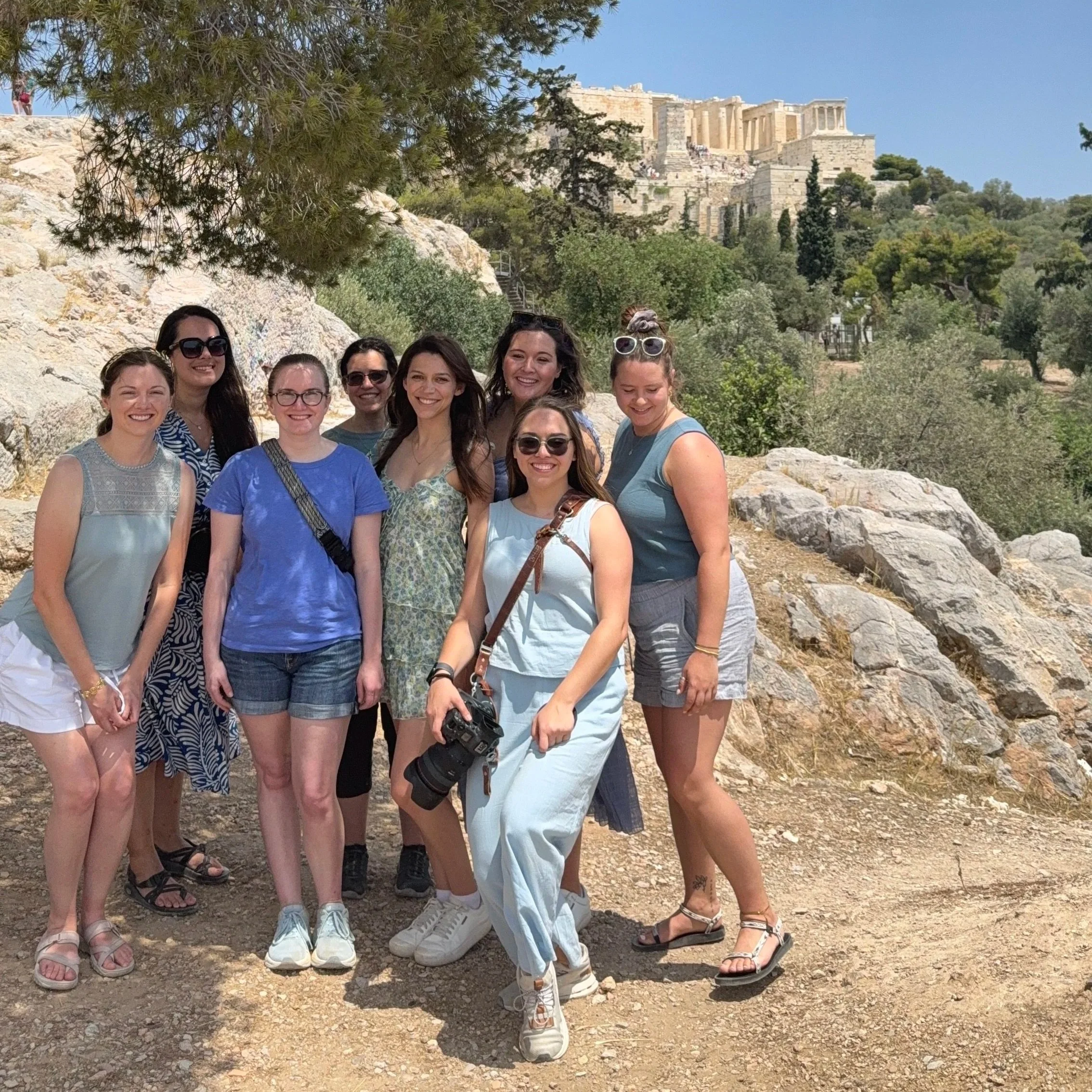
Standing on Mars Hill
The Areopagus, Mars Hill, is a rocky outcrop just below the Acropolis in Athens. It doesn't look like much from a distance. You might even pass it by if you weren’t looking for it, but when you climb it and stand at the top, you understand immediately why Paul chose it.
From it, you can see the entire city. The ancient agora stretching out below. The temples. The places where Athenian philosophers gathered to debate ideas. This was the intellectual and cultural center of the ancient world, and Paul walked straight into the middle of it and started talking about a God they didn't know.
What always stood out to me was the inscription. The Athenians had built an altar "to an unknown god,” a hedge against accidentally offending any deity they might have missed. Paul, who had been walking through the city and noticing everything, used that altar as his opening. "The God who made the world and everything in it... does not live in temples built by human hands." He took their own language, their own religious instinct, and turned it into a doorway.
Standing there, looking out over the same city Paul looked out over, I felt something shift. This wasn't ancient history. This was a man doing exactly what missionaries and ministers do today… reading the culture, finding the opening, and walking through it. It made ancient history feel very, very current.
Ancient Corinth and the Port Would Change Everything
Corinth moves you.
Ancient Corinth is an archaeological site now, ruins of what was once one of the most important cities in the Roman world (think the NYC of its time). It was wealthy, cosmopolitan, morally complex, the kind of city Paul shouldn't have had much success in, by any reasonable measure… yet he stayed there for eighteen months. He made tents. He built a church. He wrote letters.
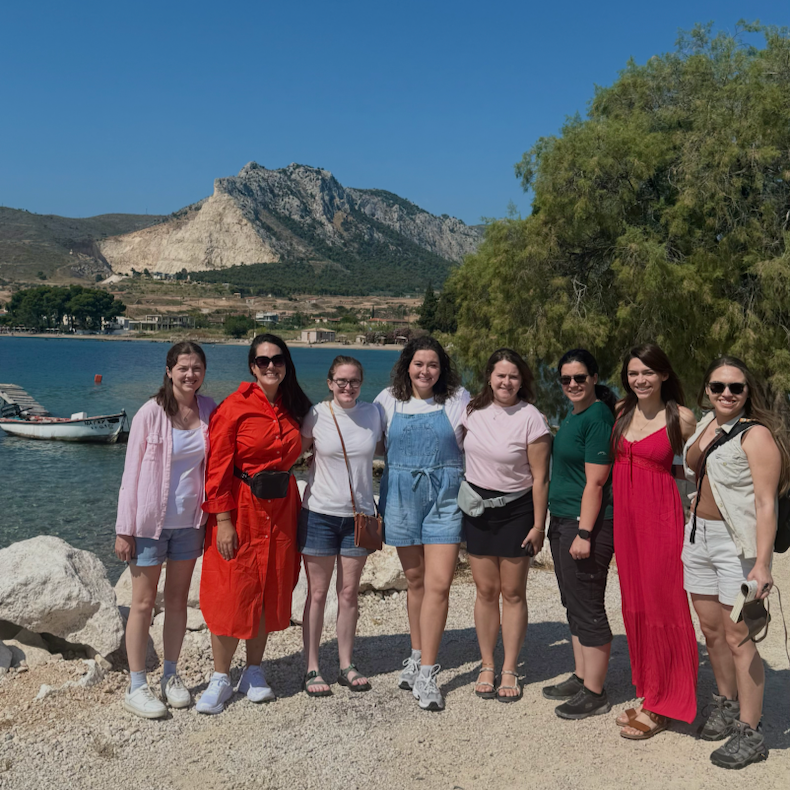
Walking through the ruins, our guide pointed out the bema, the judgment seat where Paul stood before the proconsul Gallio, accused by Jewish leaders who wanted him removed from the city. You can stand at the same raised platform. You can put your hands on the same stone. The book of Acts comes alive in a way that no commentary ever quite manages.
One detail really stood out to me:
Our guide showed us a Roman helmet… a replica of the kind Paul would have seen Roman soldiers wearing throughout his journeys. I expected it to be large, imposing but it wasn't. It was small. Almost surprisingly so.
The guide explained: Roman helmets were individually fitted to each soldier. Not mass-produced. Not one-size. Custom made for the person wearing it… and then she said, just like our salvation.
She immediately spoke of Ephesians 6, which Paul would have written after visiting Ephesus (and Corinth just before). "Take the helmet of salvation." I'd always read that as a general instruction… to put on your salvation, protect your mind but standing there looking at an actual Roman helmet, I understood it differently. The helmet of salvation isn't a generic piece of armor. It's fitted to us just as our salvation is individually revealed, personal, made for exactly we are.
I've read that passage dozens of times since. It's never been the same.
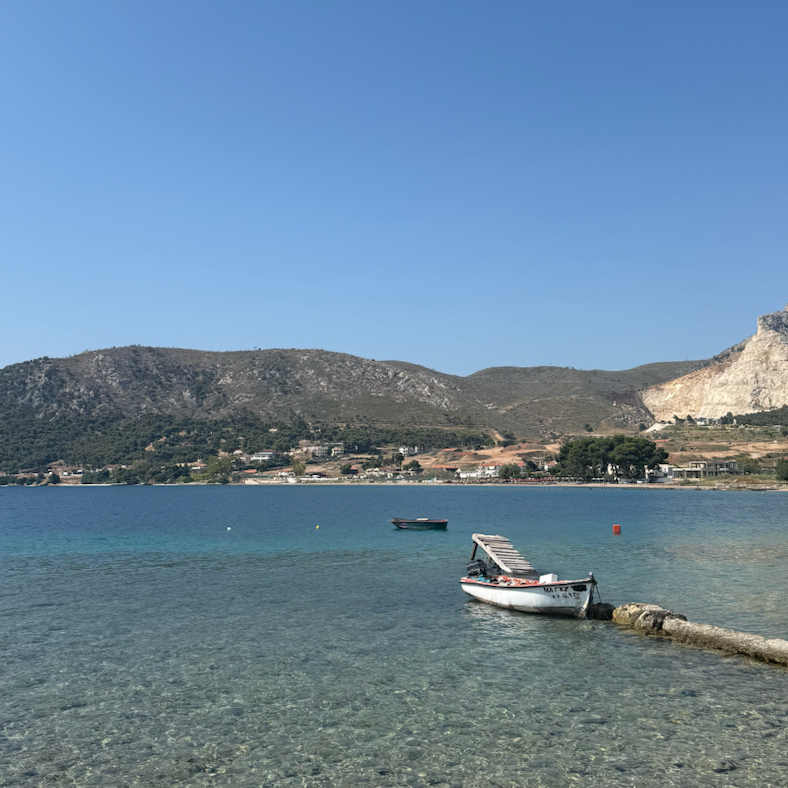
The Port at Cenchreae (Modern Kechries)
A short drive from ancient Corinth sits Cenchreae, the eastern port where Paul sailed for Ephesus in Acts 18.
It's much quieter now, barely even a small harbor, more like a beach spot with a few ruins partially submerged in the water, fishing boats in the distance. Nothing dramatic on the surface.
We stood at the edge of that water, knowing Paul stood at that same edge before setting sail. It’s a moment that narrows the distance between you and the Bible in a way that's hard to explain to someone who hasn't experienced it.
He was a real person. Standing at this port. Making a real decision to leave one city and sail toward another, carrying a message he believed was worth his life.
It doesn't feel like history at that point. It feels like a conversation across two thousand years.

1 Corinthians 13:12 - For now we see in a mirror dimly, but then face to face. Now I know in part; then I shall know fully, even as I have been fully known.

Bema at Corinth - 2 Corinthians 4:17-18

Ephesians 6:17 - Take the helmet of salvation and the sword of the Spirit, which is the word of God.
Why This Matters for the Trip
We include Athens and Corinth on the Greece trip on purpose. Not because they're the famous stops (though the Acropolis is genuinely stunning), but because standing in those places do something to your faith that reading about them simply cannot.
You don't have to be a theologian to feel it. You don't have to have a seminary degree or deep knowledge to have a better undestanding of Paul's letters. You just have to show up and let the place speak.
Every woman who's stood on Mars Hill with us has had her own moment. Her own perspective that shifted. That's not something we can manufacture or plan, it happens because the places themselves carry weight, and because when you're standing somewhere that matters with women who are paying attention, the Lord speaks to your heart in a new and profound way.
This year, we'll walk these same sites again. If you've ever wanted Acts 17 and 18 to feel like more than words on a page, we'd love for you to come experience it with us.
See the full Greece itinerary →
Learn more about Biblical Sites in Greece, read: Biblical Sites Bucket List: Greece Edition